Matter and Thread Explained in Plain English
This post is part of a 3-part Nuztech series on heating, energy and smart home standards. Each part stands on its own, but together they cover the three questions I get asked most.
Part 1: Hive vs Tado vs Nest: smart thermostats for UK boilers
Part 2: See what your house really uses: CT clamp energy monitoring
Part 3: Matter and Thread explained in plain English (you are here)
If you’ve bought anything smart in the last couple of years, you’ll have seen the Matter logo on the box: a wee three-armed symbol. Some boxes also mention Thread. Shop assistants mumble something about “the future” and move on.
Here’s what they actually mean, from a sparky who’s had to make all this stuff work in real houses, and whether you should care.
The jargon buster

The easiest way to think about it: Matter is the language. Thread is the road the message travels on.
Matter: the common language
For years, every smart home brand spoke its own dialect. An Apple HomeKit device didn’t talk to Alexa. A Google device didn’t talk to Apple. You picked a team and stuck with it, or you ended up with three apps to turn on one light.
Matter is a shared language that all the big players agreed on: Apple, Google, Amazon and Samsung, plus Home Assistant. A Matter device works with any of them.
Even better, Matter supports multi-admin. One device can be controlled by several systems at the same time. Your partner uses Siri, you use Home Assistant, the kids shout at Alexa, and they’re all controlling the same light. No arguments. Well, fewer.
Thread: the low-power mesh network
Thread is a wireless network designed for small, battery-powered smart devices. It’s a close cousin of Zigbee and does a similar job:
- Mesh network: mains-powered Thread devices pass messages along to each other, so the more you have, the further the network reaches.
- Self-healing: if one device drops out, messages find another route.
- Low power: sensors can run for a long time on a coin cell.
- Fast: responses feel instant, without the half-second lag some Wi-Fi gadgets have.
The big difference from Zigbee is that Thread speaks the internet’s own language (IPv6). That makes it easier for different brands’ hubs to share one network.
One more thing: Matter doesn’t have to use Thread. A Matter device can also run over Wi-Fi (mostly mains-powered kit like plugs) or Ethernet. Thread is just the best fit for small, battery-powered gadgets.
Why should you care?
What it actually fixes
- No more hub clutter. Instead of a Hue bridge, an IKEA hub, an Aqara hub and whatever else, a single Thread border router can serve devices from lots of brands.
- No more lock-in. Fancy switching from Google to Apple, or to Home Assistant? Your Matter devices come with you.
- Local control. Matter devices talk to each other on your own network. When the internet drops, your lights still work. (You know how I feel about that.)
Thread border routers, explained simply
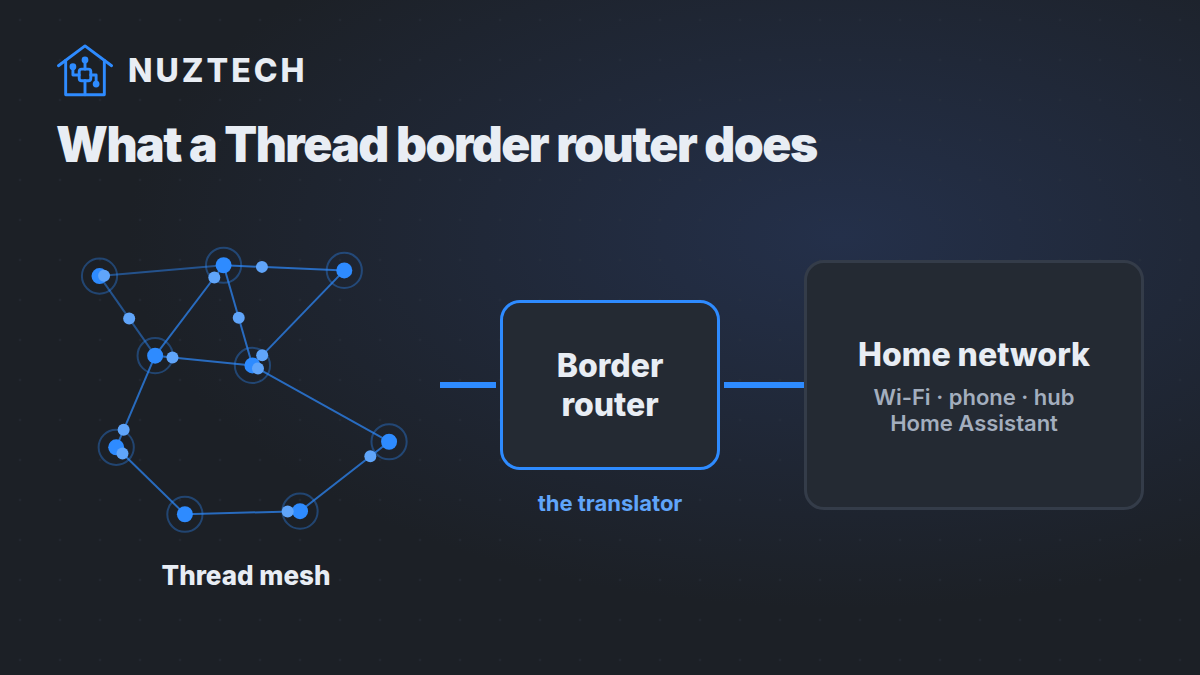
Thread devices can’t talk to your Wi-Fi network directly. They need a translator, called a Thread border router, that connects the Thread mesh to the rest of your home network.
The good news: you might already own one. Common border routers include:
- Apple: HomePod mini, HomePod (2nd gen), and Apple TV 4K models with Thread
- Google: Nest Hub (2nd gen), Nest Hub Max, Nest Wifi Pro
- Amazon: some Echo models, including the Echo (4th gen)
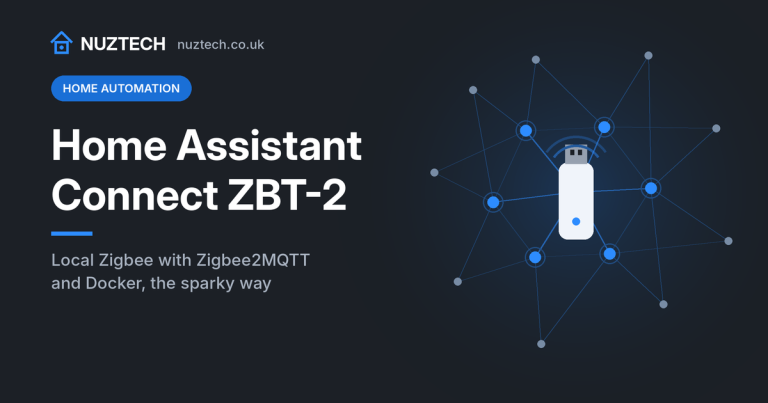
- Home Assistant: Home Assistant Yellow, or a Home Assistant Connect ZBT-2 running Thread firmware
- Tado: the Bridge X that comes with the Tado X range
⚠️ ZBT-2 owners: As I covered in my ZBT-2 guide, the stick runs Zigbee or Thread, not both at once. If yours is running your Zigbee network, you’ll need a second one for Thread.
Sparky’s tip: Different brands’ border routers don’t always join up into one network nicely. You can end up with an “Apple Thread network” and a “Google Thread network” side by side. Newer versions of Thread are fixing this, but for a smooth life, pick one main ecosystem to add your Thread devices through.
Practical buying advice: Matter-over-Thread or stick with Zigbee?
Here’s my honest take.
Stick with Zigbee (and Zigbee2MQTT) if:
- You’ve already got a Zigbee setup that works. Don’t rip out a working network to chase a logo.
- You want the widest choice and the lowest prices. There are thousands of Zigbee devices, many of them dirt cheap.
- You run Home Assistant and you like the fine control Zigbee2MQTT gives you.
Go Matter-over-Thread if:
- You’re starting from scratch.
- Your household uses a mix of Apple, Google and Alexa, and you want everyone’s phone and speaker to work.
- You want something that will still work with whatever platform you’re using in five years’ time.
Either way:
- Check the box for the Matter logo, and check whether the device uses Thread or Wi-Fi. “Works with Matter” on a Wi-Fi plug is a different beast from a Thread sensor.
- Make sure you’ve got a border router before buying Thread devices, or they’ll sit in a drawer.
- Mixing is fine. Plenty of homes, mine included, run Zigbee and Thread side by side in Home Assistant. They’re not rivals. They’re both just ways of getting a message from the light switch to the light.
In short
- Matter is the common language. Thread is the low-power mesh network it often travels on.
- You need a Thread border router, and you might already own one.
- Starting fresh, or in a mixed Apple, Google and Alexa house? Matter-over-Thread is a great choice.
- Got a working Zigbee setup? Keep it. They live happily side by side.
Questions people ask
Matter is the common language smart devices use to work with Apple, Google, Amazon, Samsung and Home Assistant. Thread is the low-power mesh network Matter often travels on. A Matter device can also run over Wi-Fi or Ethernet.
Yes, for Thread devices. It connects the Thread mesh to the rest of your home network. You may already own one: a HomePod mini, a Nest Hub (2nd gen), some Echo models, Tado’s Bridge X, or a Home Assistant Connect ZBT-2 running Thread firmware.
Not if your Zigbee setup already works. Zigbee still has the widest choice and the lowest prices. Matter-over-Thread makes most sense if you’re starting from scratch or your house mixes Apple, Google and Alexa. The two run happily side by side in Home Assistant.
Yes. Matter devices talk to each other on your own network, so when the internet drops, your lights still work.
The whole series
- Part 1: Hive vs Tado vs Nest: which smart thermostat for your UK boiler?
- Part 2: See what your house really uses: CT clamp energy monitoring
- Part 3: Matter and Thread explained (you are here)
The best smart home is still the one you don’t notice. These three just help it notice the right things for you.
Prices and energy figures are correct at the time of writing (October 2026). Energy prices are from the Ofgem price cap for 1 October to 31 December 2026. Always check a product’s current subscription terms and compatibility before buying.