
SimpliSafe Windsor: Is It the Right Alarm for Your House?
Picking a burglar alarm is a bit like buying a car. The price on the window is never the price you actually pay. There’s the kit, then the extras you didn’t realise you needed, then the monthly bit that quietly keeps going long after the excitement has worn off.
So let’s take the SimpliSafe Windsor package apart properly: what you get, what it costs over a few years, and whether it’s the right fit for your house. This is a look at the package as SimpliSafe sells it, not a long-term test on my own wall, so I’ll stick to what’s in the box and what the numbers say.
What is the SimpliSafe Windsor?
SimpliSafe sells wireless alarm kits you can fit yourself. No cables running through the house, no lifting floorboards, no alarm engineer tutting at your loft. The Windsor sits in the middle-to-upper end of their range and is aimed at family homes with a few ways in: front door, back door and some ground-floor windows.
What’s in the box
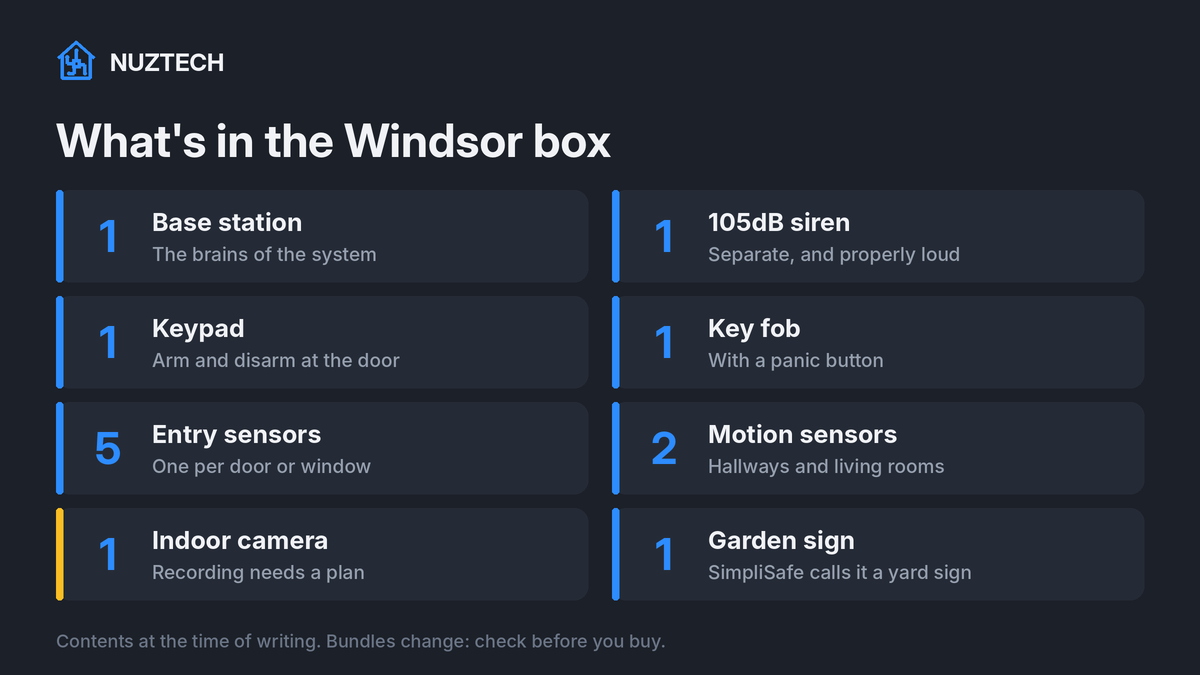
At the time of writing, the Windsor package includes:
- Base station: the brains of the system. Everything talks to this.
- 105dB siren: a separate siren, and properly loud. Your neighbours will know.
- Keypad: for arming and disarming without digging your phone out.
- Key fob: arm and disarm from the drive, with a panic button.
- 5 entry sensors: for doors and windows. They trigger when something opens.
- 2 motion sensors: for hallways and living rooms, so you’ve got cover if someone gets in another way.
- 1 indoor camera: handy, but read the subscription section before you get attached to it.
- Garden sign (SimpliSafe calls it a yard sign): the cheapest deterrent in the box, and not a bad one.
That gives you two layers: sensors on the ways in, and motion sensors for anyone who gets past them. It’s a sensible setup for a typical semi or detached house.
SimpliSafe changes its bundles and offers regularly, so check the current contents on their site before you buy.
Are five entry sensors enough?
For some houses, aye. For plenty, no.
Five sensors covers a front door, a back door and three windows. Add patio doors, a side door into the garage and a few downstairs windows, and you’ve run out before you’ve reached the kitchen.
Before you buy anything, walk round the house and count every door and window someone could actually get through. A sensor only protects the opening it’s stuck to, so five sensors means five openings covered, not five rooms. Budget for extras if your count comes out higher.
What it really costs
This is where the honest version starts.
The kit
The Windsor’s full price has been listed at around £500, but SimpliSafe runs discounts more often than not, so check the current price before you take that figure as gospel. Add any extra sensors your walk-round turned up, and Pro Setup if you’d rather someone else fitted it (from £129).
The monitoring
You don’t have to pay monthly. Without a plan, the Windsor works as a standalone alarm: something trips, the siren goes off, and the rest is up to you. If you’re asleep, at work or on holiday, that’s your problem to sort out.
If you want someone watching it, SimpliSafe UK currently offers two plans, both with no contract, and you can cancel, pause or restart any time:
- Pro Standard, 66p a day: about £20 a month, or £241 a year.
- Pro Premium, 93p a day: about £28 a month, or £339 a year. This is the one with 24/7 response, video verification, Securitas guard response, unlimited camera recording with 30-day cloud storage, and their Excess Payback scheme (up to £350 towards your insurance excess after a covered burglary, with conditions).
The package comes with your first month of Pro Premium free. Make a note in your calendar for the end of that month, because that’s when it starts costing.
Watch this: quite a few of the features people buy this kit for (camera recording, video verification, the guard response, and cellular backup if your broadband drops) sit behind a subscription. That indoor camera in the box is far more useful with Premium than without it. Check exactly what works on no plan before you buy.
The sums nobody puts on the box
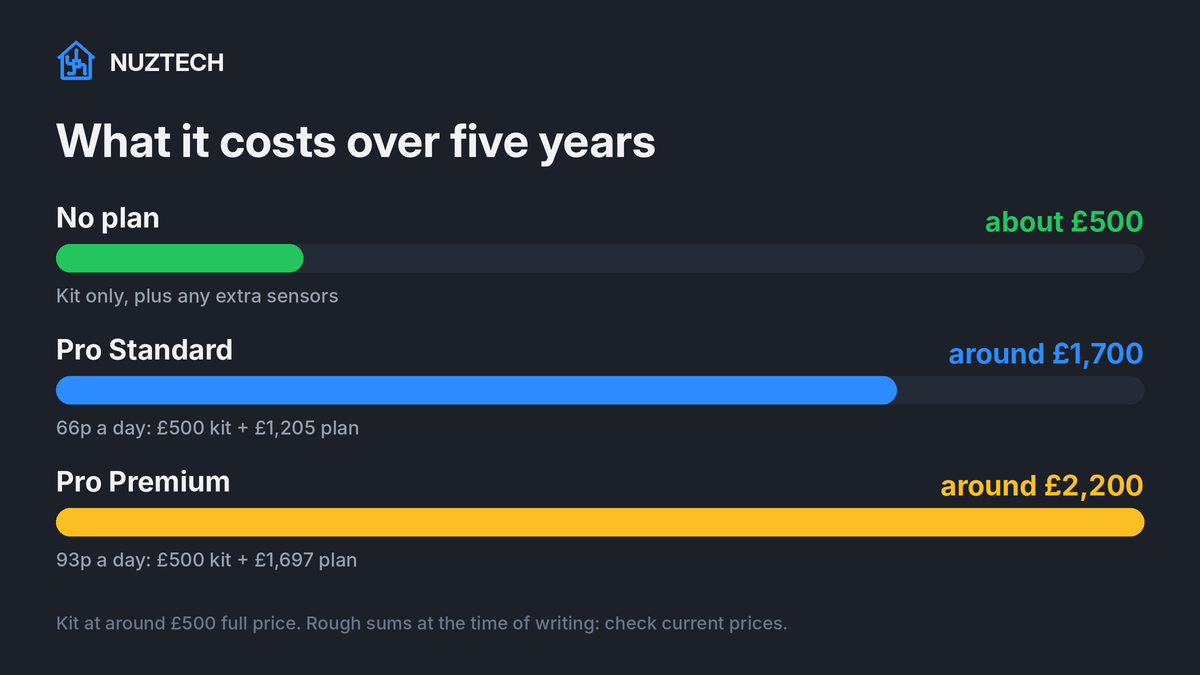
Over five years, roughly:
- No plan: about £500, plus any extra sensors.
- Pro Standard: about £500 + £1,205 = around £1,700.
- Pro Premium: about £500 + £1,697 = around £2,200.
None of that makes it a bad buy. Just go in knowing the monthly bit costs more than the kit within a couple of years.
The good bits
- No wiring. For a lot of people this is the whole appeal. It’s battery sensors and a plug-in base station, so it’s a proper DIY job.
- Easy to add to. You can add sensors and cameras as you go, plan or no plan: start with the doors, then add the garage or the extension later.
- No contract. You can drop the monitoring when money’s tight, or pause it, without arguing with a call centre for a fortnight.
- Proper response if you want it. With Pro Premium, someone actually checks the alarm, looks at the video and sends help. If nobody in your house is reliably around to react to an alert, that’s worth something.
What to watch
- The ongoing cost. £339 a year for Premium is real money. Work out what it costs you over three and five years before you decide.
- Your broadband and power. A connected alarm leans on your Wi-Fi and the mains. Cellular backup comes with the paid plans, so if you’re going plan-free, think about what happens when the router’s down.
- Your insurer. Some home insurance policies have their own rules about alarms, especially if you’re after a discount. Phone them before you buy, not after. If you get a discount for having the alarm, keep the receipt and a dated photo of it fitted. I built my own app, Datestone, for keeping records like that.
- A camera doesn’t make you secure. It shows you what happened. Decent locks and doors that shut properly are still doing most of the work.
The sparky’s bit: fitting it properly
There’s no mains wiring involved with the sensors, which is half the point. They’re battery powered and stick on. The base station plugs into a normal socket, so put it somewhere central where it isn’t easy for a burglar to find and kick off the wall.
A few things I’d do:
- Test every sensor once it’s fitted. A sensor stuck on the wrong bit of the frame is about as useful as a guard dog that’s asleep in the shed.
- Point motion sensors at walkways, not radiators or windows. Heat and sunlight can cause false alarms, and if you’ve got pets, check SimpliSafe’s guidance on placement first.
- Put a reminder in your phone to check the sensor batteries once a year.
- If you want the siren or base station somewhere with no socket nearby, that means a new outlet. That’s a job for a qualified electrician, not an extension lead taped to the skirting.
Is the Windsor right for your house?
It’s worth a look if you:
- live in a medium or larger house with several doors and windows to cover
- want something you can fit yourself in an afternoon
- like the idea of monitoring without a contract
- want to add to it over time
It’s probably not for you if your house needs far more sensors than the box gives you, or if you want everything, including camera recording, without paying monthly.
Questions people ask
Yes. Without a plan it works as a standalone alarm: something trips and the siren goes off. Camera recording, video verification, the guard response and cellular backup all need a paid plan.
Pro Standard is 66p a day (about £20 a month) and Pro Premium is 93p a day (about £28 a month), both with no contract. The package comes with the first month of Pro Premium free.
Yes. The sensors are battery powered and stick on, and the base station plugs into a normal socket. If you want the siren or base station somewhere with no socket nearby, a new outlet is a job for a qualified electrician.
Five sensors cover five openings, such as a front door, a back door and three windows. Count every door and window someone could get through, and budget for extra sensors if you need more.
The verdict
The Windsor is a solid, sensible bundle: a loud siren, a decent spread of sensors, an indoor camera and the freedom to choose your monitoring. For a typical family home it covers the basics well.
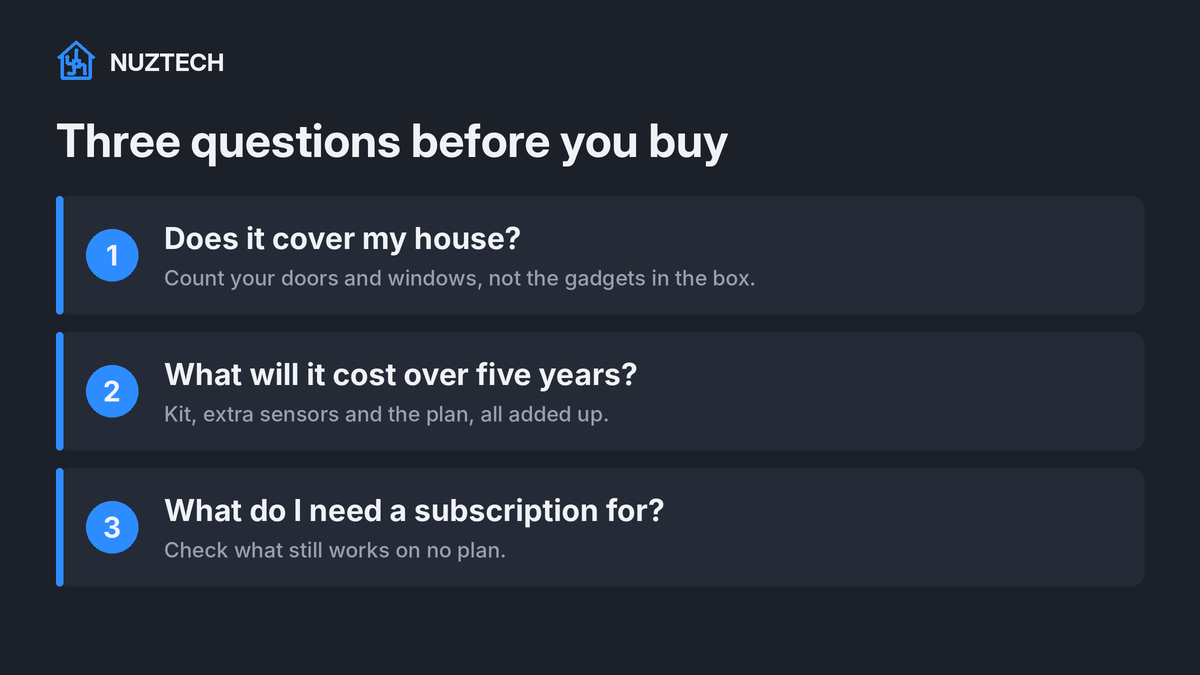
Before you buy, ask yourself three things:
- Does it cover my house? Count your doors and windows, not the gadgets in the box.
- What will it cost over five years? Kit, extra sensors and the plan, all added up.
- What do I actually need a subscription for? Check what still works on no plan.
Buy it because it fits your house and your budget, not because the box looks impressive. And don’t forget the cheapest security upgrade going: locking the back door. No alarm’s managed that one yet.
Prices checked on 3 November 2026. The monitoring and Pro Setup prices are from SimpliSafe UK’s own pages. The Windsor kit price is its last listed full price: SimpliSafe changes its offers often, so check SimpliSafe UK’s site for the latest before you buy.
Sources
- SimpliSafe UK: Windsor package
- SimpliSafe UK: professional alarm monitoring plans
- FMB HomePicks: SimpliSafe home security system review
Written by Nuztech: a qualified UK electrician with 30 years in the trade. We look at smart kit the way an electrician does: wiring, neutral wires, back boxes, safety and whether it still works if the app dies.